



Weld Tables
Showing 25–36 of 48 resultsSorted by popularity
DIY Welding Tables, Welding Table Tops
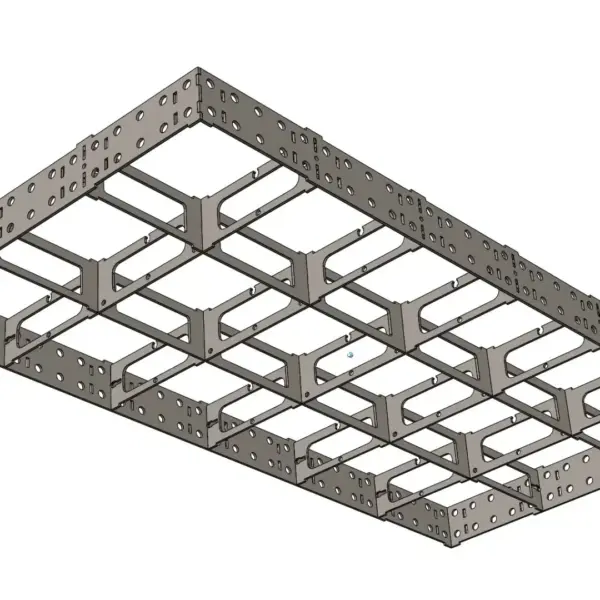
40"x100" - Welding Table Top
Price range: $1,999.99 through $2,999.99
Select options
DIY Welding Tables, Welding Table Tops
40"x60" - Welding Table Top
Price range: $1,199.99 through $1,799.99
Select options
DIY Welding Tables, Welding Table Tops
60"x60" - Welding Table Top
Price range: $1,799.99 through $2,699.99
Select options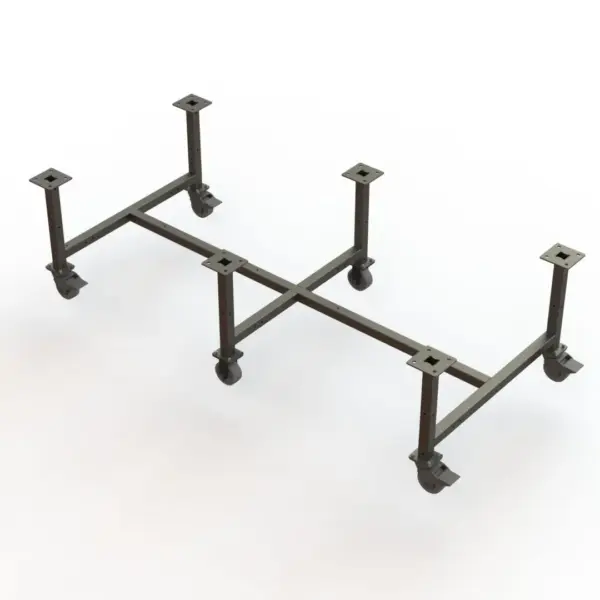
DIY Welding Tables, Welding Table Legs
50"x100" - Welding Table Legs
Price range: $599.99 through $719.99
Select options
DIY Welding Tables, Welding Table Tops
50"x100" - Welding Table Top
Price range: $2,499.99 through $3,749.99
Select options
DIY Welding Tables, Welding Table Tops
50"x50" - Welding Table Top
Price range: $1,249.99 through $1,874.99
Select options
DIY Welding Tables, Welding Table Legs
40"x80" - Welding Table Legs
Price range: $419.99 through $499.99
Select options
DIY Welding Tables, Welding Table Tops
40"x80" - Welding Table Top
Price range: $1,599.99 through $2,399.99
Select options
DIY Welding Tables, Welding Table Legs
40"x40" - Welding Table Legs
Price range: $214.99 through $294.99
Select options
DIY Welding Tables, Welding Table Tops
40"x40" - Welding Table Top
Price range: $799.99 through $1,199.99
Select options
DIY Welding Tables, Welding Table Legs
30"x100" - Welding Table Legs
Price range: $399.99 through $519.99
Select options
DIY Welding Tables, Welding Table Tops
30"x100" - Welding Table Top
Price range: $1,499.99 through $2,249.99
Select optionsNeed Help Choosing?
Use the configurator to pick your table type, size, and options step by step.
Open ConfiguratorFully Fabricated Table vs DIY Table Kit
Both use the same precision-machined tops and 5/8" hole patterns. The difference is how much assembly you want to do and how much you want to spend.
Fully Fabricated Table
Best for shops that want ready-to-weld
- Ships fully welded with legs, leveling feet, and optional shelf
- Choose 1/4", 3/8", or 1/2" top thickness
- 15 standard sizes from 30x40 to 70x140
- Optional powder coating on base
- Surface flatness held to tight tolerances
- No assembly beyond leveling
DIY Table Kit
Best for custom builds and tighter budgets
- Buy top and legs separately
- Same precision-machined tops as fabricated tables
- Pair with your own base or TMW leg kits
- Lower cost per square foot of work surface
- Ideal for custom heights or non-standard frames
- Ships flat for easier handling
Welding Table Size Guide
All tops are A572-50 steel with 5/8" holes on 2" centers. Available in 1/4", 3/8", and 1/2" thickness.
| Size | Dimensions | Holes | Best For |
|---|---|---|---|
| 30 x 40 | 2.5' x 3.3' | 300 | Small parts, bench work |
| 30 x 60 | 2.5' x 5' | 450 | Light fabrication, tight spaces |
| 30 x 80 | 2.5' x 6.7' | 600 | Long narrow weldments |
| 30 x 100 | 2.5' x 8.3' | 750 | Pipe and rail work |
| 40 x 40 | 3.3' x 3.3' | 400 | Compact general purpose |
| 40 x 80 | 3.3' x 6.7' | 800 | Mid-size fabrication |
| 40 x 140 | 3.3' x 11.7' | 1,400 | Long production runs |
| 50 x 50 | 4.2' x 4.2' | 625 | Square layout, versatile |
| 50 x 100 | 4.2' x 8.3' | 1,250 | Standard shop table (4x8) |
| 60 x 60 | 5' x 5' | 900 | General fabrication (5x5) |
| 60 x 100 | 5' x 8.3' | 1,500 | Large shop table (5x8) |
| 60 x 120 | 5' x 10' | 1,800 | Heavy fabrication (5x10) |
| 60 x 140 | 5' x 11.7' | 2,100 | Production cell |
| 70 x 120 | 5.8' x 10' | 2,100 | Wide heavy fabrication |
| 70 x 140 | 5.8' x 11.7' | 2,450 | Largest standard config |
All sizes available in Standard (carbon steel) and Stainless Steel. DIY tops available in most sizes. Custom sizes available on request.
Welding Table Overview
Weld Tables FAQ
This is one of the most common sources of frustration in the welding table world, and it’s worth understanding before you buy anything.
The “16mm standard” isn’t actually a standard. Every welding table manufacturer advertises “16mm” or “5/8 inch” holes, and every tooling company sells “16mm” pins. But here’s the problem: if a hole is exactly 16mm and a pin is exactly 16mm, the pin won’t fit. There has to be clearance. And since there’s no universal standard that locks in both the nominal size and the acceptable tolerance, every manufacturer picks their own number somewhere around 16mm and assigns their own tolerance to it. The result? You buy a table from one brand and clamps from another, and they don’t fit.
Our specifications. We’ve dealt with this problem firsthand, and here’s what we’ve standardized on:
- Hole diameter: 0.630″ � 0.001″ (about 16.00mm). Range: 0.629″ to 0.631″.
- Pin diameter: 0.6275″ � 0.001″ (about 15.93mm). Range: 0.6265″ to 0.6285″.
- Pin length: 19mm to 20mm (0.748″ to 0.787″).
In the worst case (largest pin vs smallest hole), that still leaves 0.0005″ of clearance, so the pin always fits. These are tight tolerances, but that’s the point.
Compatibility with other brands. Our holes are sized to work with most standard 16mm / 5/8″ tooling on the market, including clamps, stops, and fixtures from major manufacturers. Our accessories are built to the same spec, so everything fits together perfectly. That said, we’ve seen some pretty inconsistent tolerances from other brands over the years. Some manufacturers don’t even hold the same tolerances across their own product lines. If you’re buying tooling from a third party, verify their actual pin diameter before assuming “16mm” means it’ll fit.
Hole spacing. Our tables use a 2″ (50.8mm) center-to-center hole spacing across the entire top surface and sidewalls. This is the most common grid spacing in the industry and gives you maximum flexibility for fixturing. The holes cover the full surface, not just the center, including the sidewalls on our 3D tables.
Bottom line: “16mm” is a marketing number, not an engineering spec. If you’re buying a table and tooling separately, check the actual tolerances. Or buy both from us and don’t worry about it. Read our full deep-dive on why the 16mm standard isn’t really standard.
A welding table is one of the safest things you can add to a shop, but you still need to use it right. Here’s what matters.
Grounding. Your welding table needs to be properly grounded. Connect the work clamp (ground) directly to the table or to the workpiece sitting on the table. This gives the welding current a stable, low-resistance return path. Bad grounding causes arc blow, inconsistent welds, and in worst cases, electrical shock. If your table has powder-coated legs, make sure the clamp contacts bare metal (our tables have bare steel contact points on the top surface for exactly this reason).
Stability. A welding table needs to stay put. Our tables range from roughly 200 lbs to over 1,500 lbs depending on size, so tipping isn’t a concern. If you’re using casters, make sure they’re locked before you start welding. Our total-lock casters lock both the swivel and the roll directions. If you’re using leveling feet, take a minute to level the table when you set it up. A level table keeps round stock from rolling and parts from shifting mid-weld.
Ergonomic height. Welding at the wrong height causes back strain, shoulder fatigue, and repetitive stress injuries. The standard table height is 36″, but that forces a lot of welders to hunch forward. We build our tables at 38″ standard, and we offer custom heights if you need something specific. The right height depends on your own height: if you’re 5’9″ to 6’0″, 38″ to 40″ is usually the sweet spot. If you’re taller, go higher. Spending 8 hours a day at the wrong height will catch up with you.
Fire prevention. Clear flammable materials (wood, paper, solvents, rags) at least 35 feet from the table. Keep a fire extinguisher within arm’s reach. Use welding blankets or screens to contain sparks if you’re working near anything combustible. Our tables are all-steel construction, so the table itself is fireproof. But the stuff around it might not be.
Fume management. Welding produces fumes that are hazardous with prolonged exposure. OSHA requires adequate ventilation in any welding environment. You can use source-capture extraction (an arm mounted near the weld), ambient shop ventilation, or a fully enclosed welding booth with built-in extraction. Our ModPro booths contain fumes at the source, which is more efficient than trying to filter an open shop.
UV and spatter containment. Arc welding produces UV radiation that can burn skin and eyes. If you’ve got other people in the shop, you need screens, curtains, or booths to contain the flash. Spatter can travel several feet and start fires or cause burns. A proper table setup with the workpiece clamped and fixtured reduces spatter by keeping your torch angle and distance consistent.
Workpiece security. Always clamp your work. A part that shifts mid-weld can ruin the weldment, break your arc, or fall off the table. Our tables have 5/8″ fixture holes on 2″ centers across the entire surface and sidewalls, so you’ve got unlimited clamping options. Clamps, stops, and fixtures are available for every table we make.
PPE. This isn’t table-specific, but it’s worth saying: wear a proper welding helmet with the correct filter shade, flame-resistant clothing, dry leather gloves, and safety glasses under your helmet. No table, no matter how good, replaces proper personal protective equipment.
If you’re welding on a sawhorse, a random flat surface, or the shop floor, a proper welding table changes everything. Here’s what you actually gain.
Precision and repeatability. A 3D fixture table with holes on a consistent grid (ours use 5/8″ holes on 2″ centers) lets you bolt clamps, stops, and jigs directly to the surface. That means you can fixture a part once, dial it in, and reproduce the same setup on the next 50 pieces without re-measuring. If you’re doing production work or building anything where parts need to match, this is the single biggest upgrade you can make. See our fixturing accessories.
Flatness you can trust. A welding table’s flat surface is its most important feature. If your surface isn’t flat, your weldments won’t be flat. Period. We fabricate every table on a precision-milled reference surface and verify flatness before it ships. That’s not something you get from a folding table or a piece of plate steel on legs.
Structural strength. Our 3D tables use an interlocking rib structure underneath the top. This makes them up to 30 times stronger than a flat plate of the same thickness. You can load them with heavy weldments, clamp down with full force, and pound on them without worrying about flex or deflection. The table stays flat because the structure supports the surface, not just the thickness of the steel.
Ergonomics. Working at the right height reduces back strain, fatigue, and injury over a full shift. Our tables have a standard 38″ working height (with either leveling feet or casters), and we offer custom height cuts if you need something different. A proper table height means you’re welding in position, not hunching over or reaching. Over weeks and months, that’s the difference between a career and a back injury. Read our ergonomics guide.
Organization and efficiency. With a 3D table, you can mount tool storage, vise mounts, fab squares, and extensions directly to the sidewalls and legs. Everything stays within arm’s reach. We’ve seen shops cut their setup time in half just by switching from a bare surface to a properly fixtured table with accessories staged on the table itself.
Expandability. Our tables bolt together. Start with a 40×80 and need more surface area next year? Bolt a second table to it, or add extensions to the sidewalls. The hole pattern is consistent across every table we make, so accessories and expansions are always compatible. You’re not buying a dead-end product. Explore our welding tables.
Safety. A stable, heavy table keeps your workpiece secure while you weld. It’s grounded. It doesn’t wobble or tip. The flat surface prevents parts from rolling off. And if you’re in an environment that requires welding booths for UV containment and fume management, our tables are designed to work alongside our ModPro booth system in the same facility layout.
The bottom line: a quality welding table makes your welds better, your work faster, your body healthier, and your shop safer. It’s the foundation everything else is built on.
There are a few ways to categorize welding tables, and it helps to understand all of them because they affect what you can do with the table, what it costs, and how long it’ll last.
2D vs 3D tables. This is the most important distinction. A 2D table is a flat plate of steel on legs. That’s it. No sidewalls, limited or no fixture holes, and very hard to expand. Most budget tables (Harbor Freight, VEVOR) are 2D. A 3D table has a flat top plus sidewalls, all with fixture holes. This design makes them up to 30 times stronger than a 2D table of the same thickness, significantly flatter, and fully modular. You can bolt accessories, extensions, or even other tables to the sidewalls. Every table we build at TMW is a 3D table. Browse our 3D welding tables.
By material. The four main materials are carbon steel, cast iron, stainless steel, and aluminum. Carbon steel (specifically A572-50 in our case) is the most popular. It’s strong, affordable, easy to repair, and handles heat well. Cast iron is heavier and offers good vibration dampening, but it’s brittle (a hard impact can crack it) and much more expensive. Stainless steel is for welders who need to prevent carbon contamination on stainless or aluminum workpieces. Aluminum tables are lightweight and corrosion-proof, but they’re soft, non-magnetic, and expensive. For most fabrication shops, carbon steel is the right call.
By construction. You can buy a table three ways. DIY kits give you CNC-cut tops and bolt-together legs that you assemble and weld yourself. Our DIY tops start around $600. Fully fabricated tables are professionally welded, surface-ground flat, and ship ready to work. Ours start at $1,099. And then there are flat-pack kits from companies like CertiFlat where you’re assembling tab-and-slot pieces. Each approach has trade-offs in price, precision, and effort.
Fixture tables vs general purpose. Fixture tables have a grid of holes (ours use 5/8″ holes on 2″ centers, compatible with all standard 16mm tooling) that let you bolt clamps, stops, and jigs directly to the surface. This is what makes repeatable, precise work possible. General purpose tables, like our heavy duty workbenches, have a solid flat top without fixture holes. They’re built for assembly, layout, teardown, and tasks where you don’t need fixturing. A lot of shops run both.
Portable vs stationary. Most professional tables are stationary with leveling feet or locking casters. We offer both options on every table. Portable/folding tables exist in the budget space for field work, but they’re not suitable for precision fabrication. If you need mobility in a production environment, our tables with total-lock casters are the right solution.
For a deeper dive, we wrote a complete guide covering materials, types, thicknesses, and ergonomics.
Welding tables range from under $100 to over $12,000 depending on what you’re actually getting. I know that’s a huge range, so let me break it down honestly.
Budget 2D tables ($90 to $300). This is your Harbor Freight, VEVOR, and big-box-store territory. These are thin gauge flat steel plates on folding legs. No fixture holes, no structural support underneath, no flatness guarantee. They’ll hold a workpiece off the ground, and that’s about it. If you’re a hobbyist doing weekend projects, they work. But they’re not flat, they’re not strong, and they won’t survive a production environment. You get what you pay for.
DIY 3D table kits ($600 to $4,500). This is where real welding tables start. We sell CNC-cut A572-50 steel tops and bolt-together leg kits that you assemble yourself. Our DIY tops start around $600 for a 30×40 and go up to about $3,750 for a 60×60. Add a leg kit ($160 to $720) and you’ve got a proper 3D table with 5/8″ fixture holes on 2″ centers for a lot less than a fabricated table. The trade-off: you’re welding and assembling it yourself, and you won’t get surface grinding or powder coating. Great option if you’ve got the skills and want to save. CertiFlat makes a similar product in this range. Browse our DIY welding table kits.
Fully fabricated 3D tables ($1,100 to $12,000+). This is where we live. Our fabricated A572-50 carbon steel tables start at $1,099 for a 30×40 and go up to about $12,239 for a 70×140 with a 1/2″ top. The price depends on your size, top thickness (1/4″, 3/8″, or 1/2″), and leg options. Every table is professionally welded by our AWS certified team, fabricated on a milled reference surface, surface-ground flat, and ships ready to work. The difference between a $200 flat plate and a $3,000 TMW table is structural design (interlocking 3D rib structure vs a flat plate), material grade (A572-50 with 50,000 PSI yield vs commodity steel), precision (we verify flatness with a level before it ships), and the fact that ours will still be flat 20 years from now. See all fabricated welding tables.
Stainless steel tables ($3,100 to $10,000). If you’re welding stainless or aluminum parts and can’t risk cross-contamination from carbon steel, you need a stainless surface. We’re the only company making commercially available, US-built 304 stainless steel welding tables. Same 3D design as our carbon steel line, same hole pattern, same build process. The premium is the material cost. View stainless steel welding tables.
Plasma-nitrided tables ($3,000 to $15,000+). Companies like Siegmund and StrongHand sell plasma-nitrided carbon steel tables at premium prices, marketing them as “rust-proof,” “scratch-proof,” and “stronger.” We’ve done extensive research on this (we wrote a 5,000-word article with the metallurgy to back it up). The short version: plasma nitriding produces a hard layer that’s 10 to 20 microns thick, about 1/5th the thickness of a sheet of paper. It does reduce spatter adhesion (that part is true). But it doesn’t make the table “rust-proof” (one scratch through 20 microns exposes bare carbon steel), it doesn’t make it “stronger” (a surface treatment can’t change the structural properties of the steel underneath), and it doesn’t justify a 3x to 5x price premium over an equivalent un-nitrided table. If you need real corrosion resistance, a 304 stainless steel table is the honest solution, not a marketing coating. Read the full article: Nitrided Welding Tables are a Scam.
So what should you spend? It depends on your work. For a home garage, $200 to $600 gets you started. For a serious shop, school welding lab, or production floor, plan on $1,100 to $5,000 for a fabricated table that’ll last decades. And if you’re on a budget but want real quality, our DIY kits starting at $600 are the best value in the industry.
The industry-standard height is 36″. But that is flawed because it forces many welders to lean forward, causing back strain. The optimal height depends on the welder’s height.
| Welder’s Height | Optimal Table Height |
| 5’2″ – 5’4″ | 34″ – 36″ |
| 5’5″ – 5’8″ | 36″ – 38″ |
| 5’9″ – 6’0″ | 38″ – 40″ |
| 6’1″ – 6’4″ | 40″ – 42″ |
| Over 6’4″ | 42″ – 44″ |
They typically range from 2′ x 3′ up to 5′ x 10′. However, modern 3D tables are designed to be modular, so you can bolt them together or add extensions and blocks to create virtually any size or configuration you need.
Table Type: 3D tables are inherently structurally stronger. You’re no longer relying on just the thickness of the top since there is an engineered structure supporting it. The top doesn’t need to be nearly as thick.
Material Choice: A tougher material (like A572-50) can “spring back” from an impact better than a softer one (like A36), potentially allowing for a thinner-but-stronger surface.
Workpiece Requirements: If you’re welding small parts and tubing, a thinner surface is fine. If you’re building heavy items (like fire engine bumpers) and risk massive impacts, you need more mass to prevent damage.
2D Tables: These are traditional flat, planar surfaces, often just a plate of steel. They are simpler, more affordable, and suitable for general welding, but are harder to expand and are generally not as flat or strong.
3D Tables: These are newer designs that feature a flat top plus sidewalls, all with fixture holes. This design makes them significantly stronger (up to 30 times), an order of magnitude flatter, and highly modular. You can bolt accessories, extensions, or even other tables to the sidewalls.
Pros: Extremely lightweight and portable with excellent corrosion resistance (will never rust). Its excellent thermal conductivity dissipates heat very quickly. It’s a non-ferrous, non-magnetic option that’s great for welding stainless or aluminum parts without contamination. Least likely material to scratch the parts you’re working on.
Cons: It’s a much softer material, making it prone to scratches and dents from heavy use. It’s non-magnetic, which can be a disadvantage for some fixturing. It’s also more expensive than carbon steel and provides less stability due to its low weight.
Pros: It’s the best choice when welding stainless steel parts to prevent contamination. It offers superior rust and corrosion resistance, making it ideal for humid environments or industries with high hygiene standards (like food processing or medical).
Cons: The cost is the biggest drawback, often being 3 times as much as carbon steel. It has a slightly lower thermal conductivity than carbon steel. You can’t use magnetic tooling on stainless.
Pros: Offers excellent surface flatness, stability, and vibration dampening due to its high mass. It has better natural corrosion resistance than carbon steel.
Cons: More brittle than steel; a hard impact can crack it. Repairs are difficult or impossible. It has lower thermal conductivity (retains heat longer). It’s significantly heavier, less portable, and more expensive. It can also suffer from iron contamination when welding stainless steel.
Pros: Generally lighter than cast iron, more affordable, and widely available. It offers excellent strength, durability, and high thermal conductivity (dissipates heat quickly). It’s also extremely easy to repair or modify.
Cons: Can warp over time with excessive heat (thicker surfaces mitigate this). Welding stainless steel on it can cause carbon contamination (can be prevented with spacers). It is susceptible to rust if not maintained with oil or anti-spatter fluids.
The four most common materials, in order of popularity, are:
- Carbon Steel
- Cast Iron
- Stainless Steel
- Aluminum (often an Al/Cu alloy)
Explore More From Texas Metal Works

Stainless Steel Welding Tables
Built for environments where contamination control and corrosion resistance matter. Texas Metal Works stainless steel welding tables use 304 stainless...

DIY Welding Tables

ModPro Welding Booths
Texas Metal Works offers the most versatile welding booths in the industry. Our stations are built with modularity at their...

Heavy Duty Workbenches
Super heavy-duty steel workbenches built for industrial use. Featuring 3/8" steel tops and heavy-gauge tube frames, these metal workbenches handle...
Outfitting a Welding Lab?
We work with school districts, community colleges, and CTE programs across the country. Our tables are built in an ISO 9001 certified facility from A572-50 American steel, and we understand PO processes, bid requirements, and fiscal year timelines.
Need booths too? We build those as well. Same facility, same team, everything designed to work together.
ISO
9001 Certified
A572
American Steel
PO
Net-30 Terms
Free
Shipping Over $899